
More employees are arriving by e-bike, scooter, and other micromobility devices. That is good news for commuting, parking demand, and sustainability goals. It also raises a practical facilities question: where can people park and charge safely?
There is no one-size-fits-all answer. A small office may be ready to begin with a secure section of an existing garage. A university or large employer may need a dedicated bike room, battery charging cabinets, or smart parking and charging infrastructure. The right solution balances rider convenience with access control, fire and electrical safety, local requirements, operations, and the real mix of devices on site.
This guide is a starting point for employers, campuses, and property teams. It is not fire, electrical, or code advice. Before installing equipment or setting a charging policy, involve your facilities team, building owner, licensed electrician, insurer, and local authority having jurisdiction.
A great commute benefit should not end at the building door. Riders need confidence that their bike will still be there at the end of the day and, where charging is offered, that they can recharge in a managed environment. Safe, visible, and convenient parking removes one of the most common barriers to choosing an e-bike or scooter for a commute.
It can also help organizations put existing space to better use. A well-planned micromobility area can reduce pressure on vehicle parking, support return-to-office goals, and give employees a tangible signal that active commuting is welcome. The goal is simple: make the low-carbon commute feel as dependable as driving, without creating new risks for riders, colleagues, or facilities teams.
Lithium-ion batteries store significant energy, so the equipment and the operating rules matter as much as the physical room. The U.S. Consumer Product Safety Commission recommends using micromobility devices and batteries designed, manufactured, and certified to applicable safety standards; following manufacturer charging instructions; using the supplied or manufacturer-recommended charger; and using only compatible replacement batteries. It also advises people to unplug when charging is complete and never put lithium batteries in trash or general recycling.
For employer programs, make these expectations clear in writing. Require original or manufacturer-approved chargers and batteries. Prohibit modified, damaged, recalled, or visibly swollen batteries from being charged or stored on site. Keep charging away from exits and paths of travel. Do not rely on extension cords or power strips as a permanent charging plan. Establish a process for reporting damage, overheating, odor, smoke, or other concerns.
When procuring e-bikes, look for third-party certification of the complete electrical system, not just a battery label. UL 2849 evaluates e-bike electrical drive train, battery, and charger system combinations. In New York City, rules are particularly rigorous, and the Fire Department provides dedicated guidance for e-micromobility cabinet review and installation. Your local requirements may differ, so confirm them early.
Important: A charging cabinet or charging station is not a substitute for safe products, manufacturer instructions, a clear policy, or coordination with the local fire and electrical authorities.
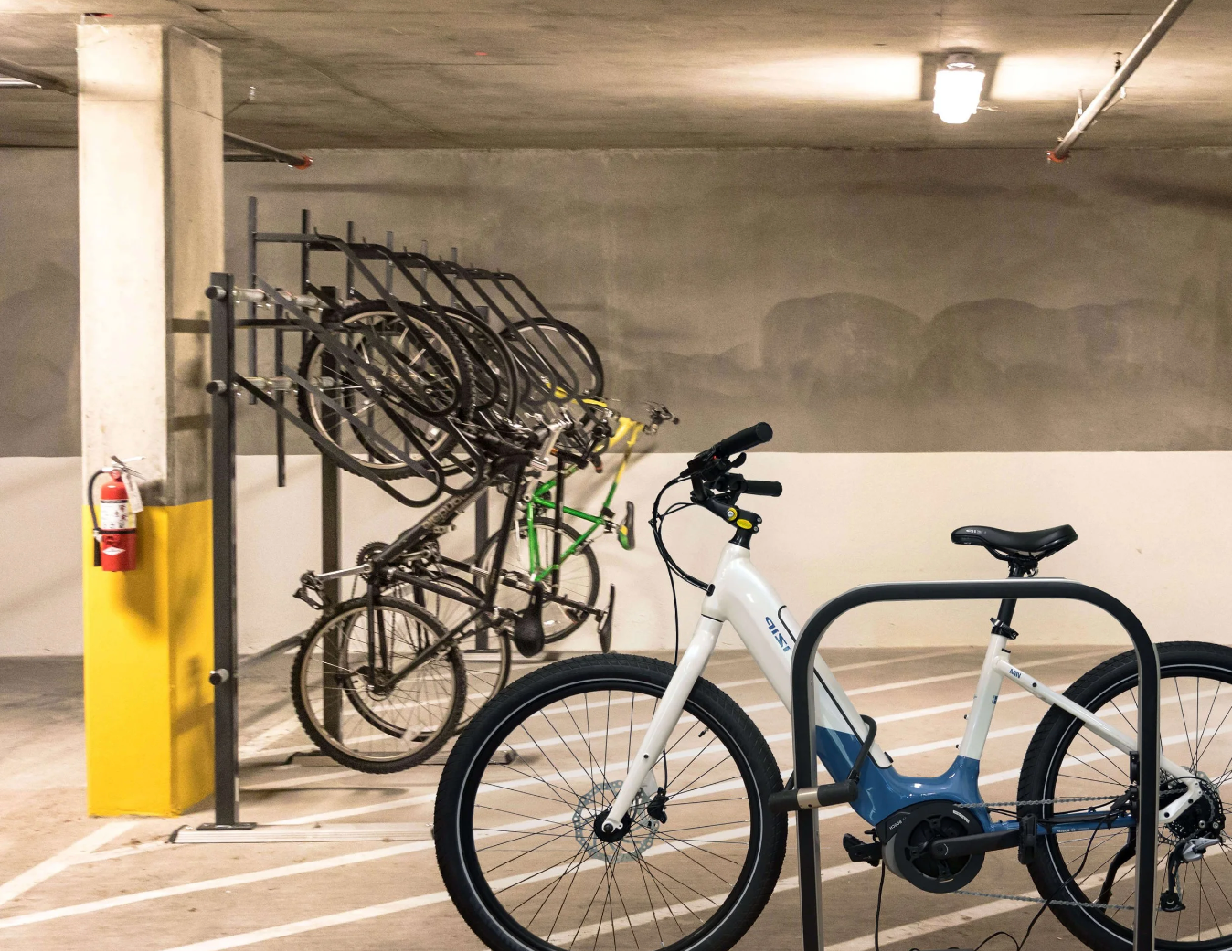
The simplest starting point is a defined and secure portion of an existing parking garage, lobby-adjacent space, or covered area. Use high-quality racks that support the frame and enable riders to lock both frame and wheel. Add lighting, wayfinding, access control where appropriate, and security cameras or natural visibility.
Best for: Organizations testing demand, teams with mostly conventional bikes or e-bikes that charge at home, and sites with limited construction budget.
Plan for: E-bikes are heavier and often longer than standard bikes. Leave room for cargo bikes, adaptive cycles, scooters, trailers, and people maneuvering devices. Keep aisles and emergency access clear. If charging is not permitted in the area, say so plainly and offer riders a clear alternative.
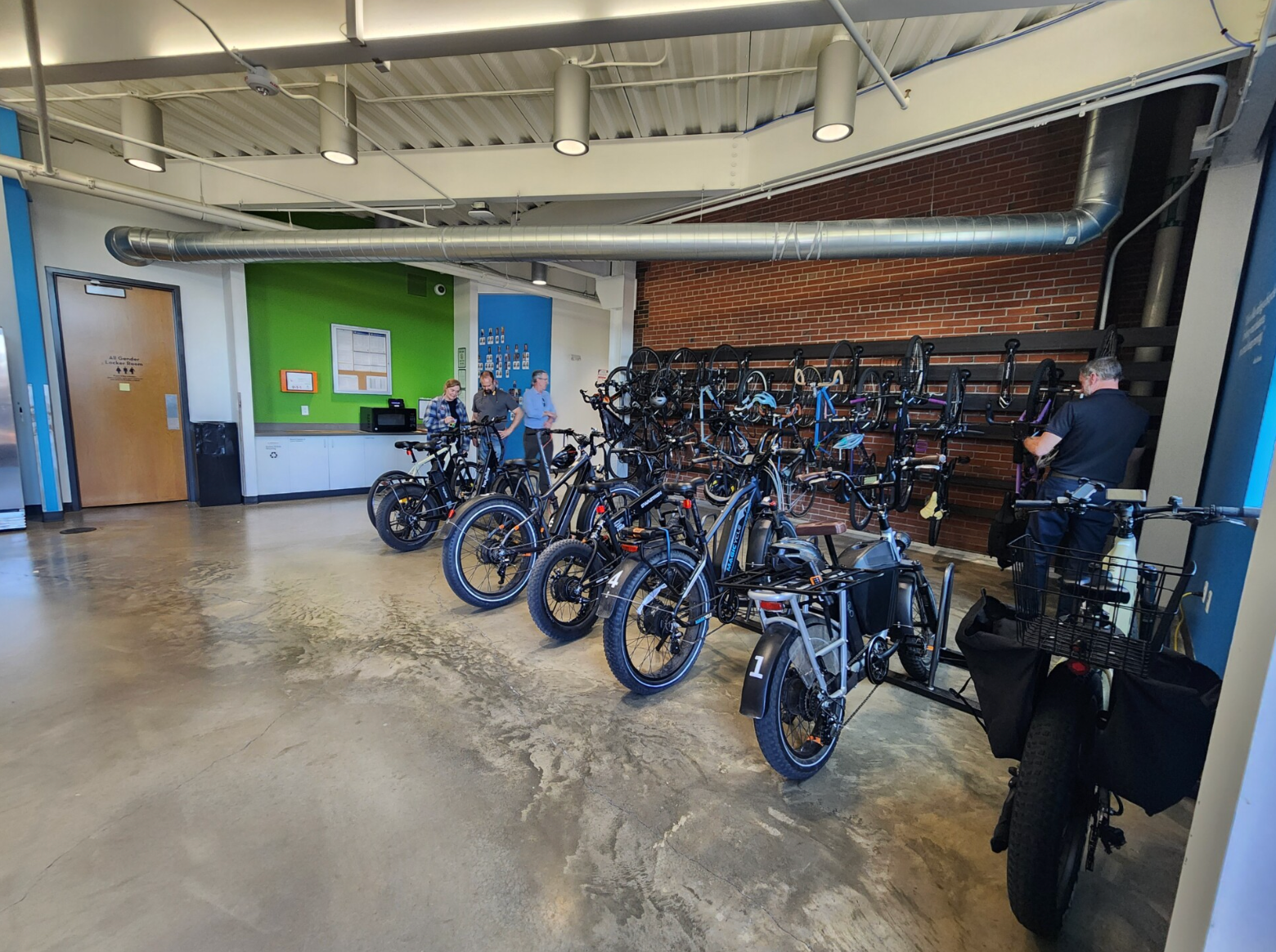
A bike room creates a more complete commuter amenity. It can combine indoor access-controlled parking with robust racks, weather protection, repair stands, lockers, and electrical infrastructure designed for the intended use. It is often a natural fit for a campus building, office headquarters, or multi-tenant property with regular rider volume.
Best for: Organizations with consistent ridership that want a high-quality, all-weather experience and room to grow.
Plan for: Do not treat a row of ordinary outlets as a charging strategy. Work with a licensed electrical professional and the authority having jurisdiction on outlet location, circuit capacity, equipment requirements, ventilation or detection needs, and placement away from exits. Pair the room with an access policy, sign-in or reservation process if capacity is limited, routine inspections, and a clear incident-response plan.
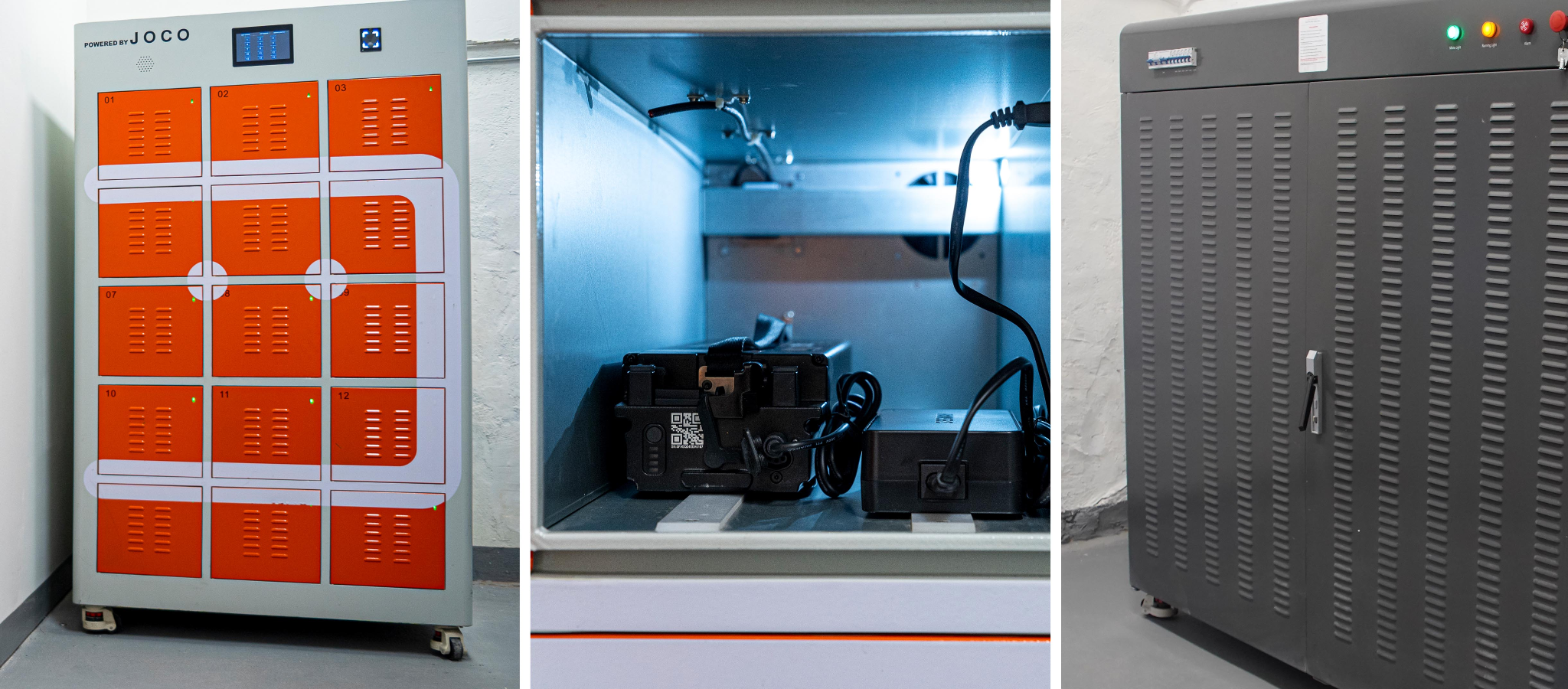
For workplaces where riders bring removable batteries indoors, purpose-built charging cabinets can create a dedicated place to charge and store batteries rather than relying on desks, hallways, or ad hoc outlets. These systems vary widely, so evaluate the cabinet itself, its protective features, electrical needs, compatibility with the batteries employees use, service model, and approvals or listings required in your jurisdiction.
Best for: Sites with a high number of removable e-bike or e-scooter batteries, particularly in dense urban environments where riders may not be able to charge at home.
Example to evaluate: JOCO offers configurable battery cabinets designed for lithium-ion e-bike batteries. Its product information describes smoke detection and alarms, temperature sensors, fire-suppression agents, and fire-rated walls intended to limit thermal-runaway propagation. JOCO says its cabinets are designed to meet high FDNY approval requirements and are installed in commercial properties and universities. Treat this as a vendor claim, and confirm the precise approvals, equipment listing, installation requirements, and local applicability directly with the vendor and your fire authority before purchase.
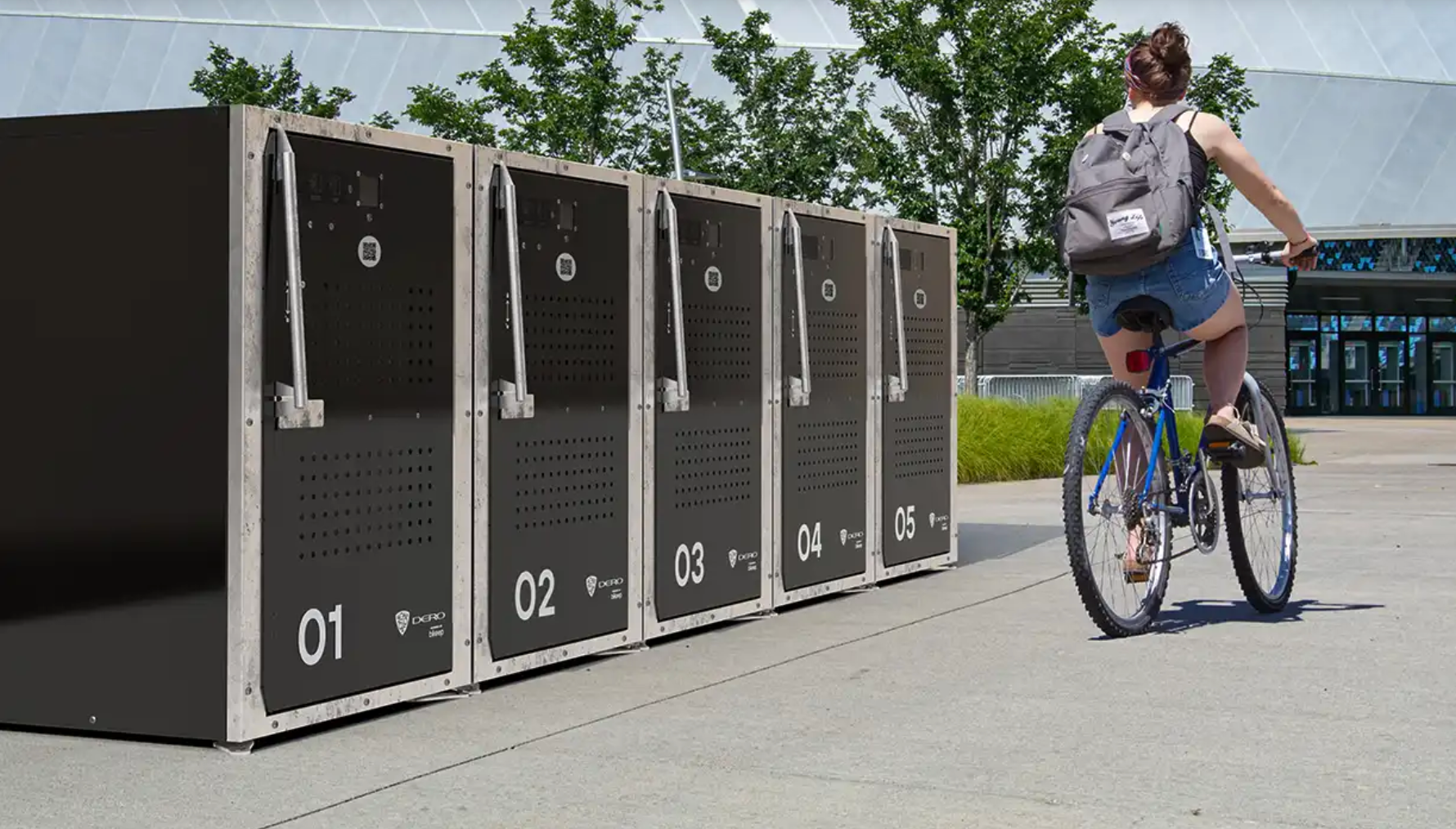
Smart stations provide a more integrated approach to secure parking, user access, and, in some configurations, charging. They can make sense for a campus, employer campus, curbside location, or public-facing facility where operators need dependable access control and visibility into use. Solutions may include docks, lockers, hangars, or enclosed charging options.
Best for: Large sites, distributed campuses, high-theft-risk areas, or programs that need a durable infrastructure investment with managed access and utilization data.
Example to evaluate: Bikeep offers smart bike and scooter stations, charging stations, lockers, hangars, and a management platform. Its systems support various access methods and product formats, including options for parking-only and charging deployments. For on-street or exterior projects, confirm site permissions, ADA and pedestrian-clearance requirements, utility coordination, permitting, weather exposure, maintenance responsibilities, and the exact device and battery compatibility.
Start with a short discovery process before selecting a product. Ask:
The strongest micromobility facilities do two things at once: they make active commuting easier, and they make safe choices the default. A rider should know exactly where to park, how to secure their device, whether and where they may charge, and what to do if a battery looks damaged. Facilities teams should know what equipment is installed, who is responsible for it, and how to respond when an issue arises.
Start with the solution your site can operate well today. A thoughtfully designed garage area can be a meaningful first step. When demand and site conditions support it, a managed bike room, purpose-built cabinet, or smart station can turn that first step into a true commuter amenity.
A safe place to park and charge helps employees turn an occasional ride into a realistic everyday commute. Ridepanda helps employers launch e-bike and micromobility benefits that make that change possible.
Vendor examples are provided for informational purposes only. Ridepanda does not endorse, certify, install, or guarantee third-party parking or charging products. Always verify current product specifications, certifications, permits, and local code requirements before making a purchase or installation decision.
By submitting this form you agree to receive communications by text message about my inquiry.
You may opt-out by replying STOP or ask for more information by replying HELP. Message frequency varies. Message and data rates may apply. You may review our Privacy Policy to learn how your data is used.
