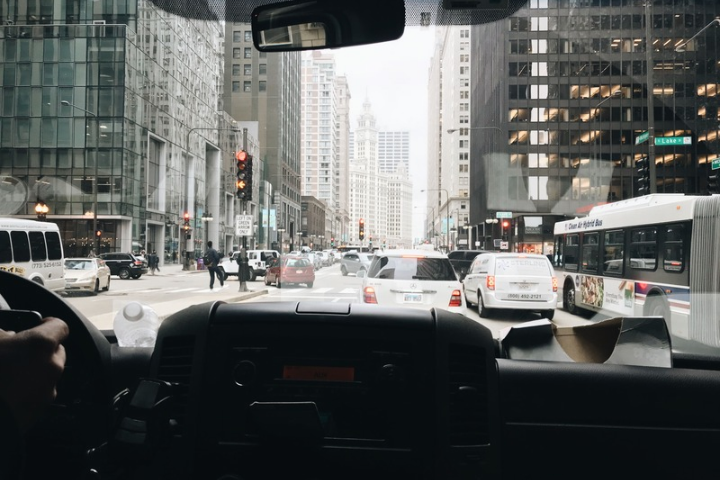
Return-to-office planning often focuses on the workplace: collaboration, culture, space utilization, and the moments that make being together valuable. But for employees, the office experience starts well before the first meeting. It starts with the trip there.
That trip carries a real financial and human cost. A recent HR Dive report on Resume.io’s Return-to-Office Tax analysis estimates that full-time office workers spend an average of $6,736 a year on the direct, out-of-pocket costs of coming into the office. That figure includes commuting, food, clothing, and other expenses that can come with office attendance. Still, the largest single category is transportation: $2,751 a year, or 40.8% of the total.
Employers cannot eliminate every cost that comes with working in person. But they can meaningfully improve one of the biggest, most visible, and most controllable parts of the experience: the commute. That is not just a transportation consideration. It is a benefits, employee experience, and return-to-office consideration.
The $6,736 estimate is a useful prompt, not a universal price tag for every employee or a cost an employer can completely erase. It represents an average across major metros and a bundle of office-related expenses. Someone who walks to work will have a different experience from someone who drives across a congested region, pays for parking, or makes multiple transit connections.
That distinction matters. An employee-first RTO strategy should avoid treating people as a spreadsheet, and it should not overpromise a single solution. But it should take seriously what employees experience every day: getting to the office can cost money, time, energy, and attention before the workday even begins.
Transportation is where employers have a practical place to start. HR Dive’s coverage of the Resume.io analysis puts that expense at $2,751 a year on average, encompassing items such as fuel, public-transit fares, parking, and other costs of getting to and from work. For HR, Total Rewards, Workplace Experience, and Facilities leaders, the message is straightforward: if being in the office matters, the journey should matter too.
Driving is still the default commute for many Americans. According to the U.S. Census Bureau’s 2024 American Community Survey, 69.2% of workers drove alone to work. For employees who rely on a car, the costs can reach well beyond a tank of gas or a daily parking fee. AAA estimates that owning and operating a new vehicle costs an average of $12,863 a year, including depreciation, financing, insurance, fuel, maintenance, repairs, tires, registration, and taxes. That is a full personal-vehicle ownership benchmark, not a commute-only cost. Actual costs vary widely by vehicle, location, mileage, and driving habits.
For employees whose route, schedule, and comfort level make biking or scooting practical, a Ridepanda subscription can provide a lower-cost active-commute option. E-scooter subscriptions start at $59 per month, or $708 per year. E-bike subscriptions start at $99 per month, or $1,188 per year. Each subscription includes more than access to a vehicle: employees also receive a helmet, lock, maintenance support, and theft coverage.
HR Dive’s coverage of the Resume.io analysis estimates that employees spend an average of $2,751 per year on transportation associated with office attendance.
Ridepanda e-scooter: Starting at $59 per month, or $708 per year
Potential savings: $2,043 less per year than the study’s average transportation-cost estimate.
Ridepanda e-bike: Starting at $99 per month, or $1,188 per year
Potential savings: $1,563 less per year than the study’s average transportation-cost estimate.
These are directional comparisons, not guaranteed employee savings. The $2,751 figure is an average estimate of annual transportation expenses associated with office attendance, while Ridepanda figures are starting subscription prices. An employee’s actual outcome depends on their vehicle selection, route, commute frequency, parking, employer subsidy, and local conditions. Still, the comparison makes the opportunity clear: when a car trip can be replaced by a bike or scooter trip, commute support can help employees keep more of their money while gaining a practical way to get to work.
A return-to-office policy may define where work happens. The employee experience determines how that policy is felt. A difficult commute can turn an otherwise productive office day into a source of friction, especially when employees face traffic, parking uncertainty, crowded transit, or a trip that leaves them feeling depleted before they arrive.
This is why commute support belongs alongside the more familiar components of an in-office experience: food, flexibility, workplace design, learning, and team connection. It gives employees more choice in how they move through their city and acknowledges that the commute is not an inconvenience outside the employer’s purview. It is the front door to the workday.
Employers may not control housing, childcare, or every expense associated with office attendance. They can, however, help make the commute more affordable, practical, and enjoyable.
For many employees, an e-bike or scooter can make shorter and mid-distance trips more approachable without requiring them to arrive sweaty, buy and maintain a vehicle on their own, or already identify as a cyclist. The goal is not to tell every employee to trade their car or train for a bike. It is to add a credible option for the people and trips where active micromobility fits.
Ridepanda helps employers offer subscriptions to a broad selection of pedal bikes, e-bikes, and e-scooters through an employee benefits experience. Employees get a vehicle matched to their needs, plus practical support such as delivery or pickup, maintenance, theft coverage, a helmet, and a lock. Employers get a managed program designed to be simple to launch and easy for employees to use.
The behavior change is real. In Ridepanda research, 74% of riders said they rarely or never commuted by bike before joining the program. After joining, 84% said they commute by bike or scooter several times a week. That matters because the people who benefit most from a commute program are not only the riders who were already riding. They are the people who need a realistic way to begin.
The result is more than a different mode of transportation. 80% of Ridepanda riders say they feel more energized and/or less stressed after commuting on their vehicle. A more positive trip cannot solve every challenge of an RTO plan, but it can help employees arrive in a better frame of mind and make the office feel like a more worthwhile destination.
For employers, the most effective commute programs do not need to create a new administrative burden. Ridepanda can fit into a broader commuter-benefit or employee-benefits strategy, helping teams offer a compelling active-commute option without managing vehicle selection, maintenance, or employee support internally. Because benefit and tax treatment can vary by program and location, employers should confirm the right funding and administration approach with their benefits provider and advisors.
HSA and FSA compatibility can offer employees another way to make an active commute more attainable, and save money by utilizing pre-tax funds. Pedal bikes and Class 1 e-bikes are eligible for HSA/FSA spending through Ridepanda. This gives employees with available health-account funds an additional option for covering an eligible subscription, while connecting commute support to well-being. Employees should confirm their available balance and any plan-specific requirements with their HSA or FSA administrator.
There is also a timely reason to revisit the broader commuter-benefits experience. For 2026, the IRS set the monthly limit for qualified transportation fringe benefits for transit passes and commuter-highway transportation at $340. See the IRS’s 2026 Employer’s Tax Guide to Fringe Benefits for the applicable rules and limits. The opportunity for employers is to make every available commute-support dollar and program choice more visible, useful, and aligned with how employees actually travel.
RTO conversations do not have to be framed as a choice between organizational needs and employee needs. The better question is: if we are asking people to come in, what can we do to make the trip better?
The $6,736 annual estimate makes the broader burden of office attendance tangible. The $2,751 transportation component points to a concrete place to act. By treating commute support as part of total rewards and workplace experience, employers can reduce friction, expand practical choice, and help employees start their office day with more energy.
Ready to explore a better commute benefit for your team?
By submitting this form you agree to receive communications by text message about my inquiry.
You may opt-out by replying STOP or ask for more information by replying HELP. Message frequency varies. Message and data rates may apply. You may review our Privacy Policy to learn how your data is used.
